A critical communication skill our students will need throughout their adult lives is the ability to advocate for themselves and manage challenging conversations. During their time at LFCDS, children are taught a variety of ways to navigate difficult situations. For example, when a young child doesn’t know what to do after a classmate snatches a toy from them, a teacher will help facilitate a conversation, modeling the language they could use. This modeling continues throughout their time at LFCDS, and we continually work with students to help them find their voices in challenging situations.

When Dr. Lisa Damour, author of Untangled: Guiding Teenage Girls Through the Seven Transitions into Adulthood worked with the LFCDS faculty after her public lecture, she discussed four different ways children typically deal with conflict. She labeled these approaches “Bulldozer” (aggressive/hostile), “Doormat” (passive/submissive), “Doormat with Spikes” (passive-aggressive/manipulative), and “Pillar” (standing up for themselves while respecting others).

Helping our students respond to conflict as “pillars” becomes increasingly important as they enter adolescence and adulthood. Many of us were never taught how to navigate challenging situations ourselves and can inadvertently give advice that might make the situation worse for our children.

If that is the case, how can we help our children navigate conflict? One of the most important things a parent can do is learn how to manage challenging conversations. There are numerous books on the topic, but one title that parents can benefit from is Difficult Conversations: How to Discuss What Matters Most by Douglas Stone, Bruce Patton, and Sheila Heen.

One of the most powerful tools outlined in the book is “Finding the Feelings Lurking Under Attributions, Judgements, and Accusations.” The skill is subtle and one that requires ongoing refinement, but once developed, it significantly improves a child’s ability to communicate effectively. The authors state that a common mistake people make when expressing feelings is they translate them into judgements about other people. Children might say, “I told them how I felt. I told them they were mean and not a good friend.” Note that this statement is mainly about the other person and not about how the individual expressing it feels. More accurately expressing their own feelings might sound more like this: “I felt sad when you played with other people during recess and did not ask me if I wanted to play.”

Stone, Patton, and Heen accordingly write, “The difference between judgements about others and statements of our own feelings is sometimes difficult to see. Judgements feel like feelings when we are saying them. Unfortunately, that person probably isn’t sure what we are feeling, and more importantly, is focused on the fact that we are judging, attributing, and blaming.”

Learning to communicate thoughtfully during difficult times is a skill all children (and adults) can benefit from. By enhancing our ability to communicate thoughtfully during challenging conversations and providing helpful guidance when our children need it, we will empower them with valuable tools to help them thrive throughout adulthood.


Posted
AuthorPete Moore

One of the most inspiring things about working at Lake Forest Country Day School is that we are always looking to improve the School so we can better meet the needs of our students. Not only do we look to the field of education for best practices, but we also read research on human performance, child development, leadership, psychology, and productivity so that we can prepare our students in the best possible way for the future ahead of them.

The more we study modern and historical figures who have a profoundly positive impact on the world, the more it becomes apparent that many of these people have the same things in common; they can manage their emotions and think clearly in highly stressful situations. Whether these people are surgeons, athletes, lawyers, engineers, CEOs, political leaders, or entrepreneurs, they often talk about how one of the keys to their success is to be emotionally nimble and emotionally intelligent.

Susan David and Christina Congleton, in their 2013 Harvard Business Review article entitled "Emotional Agility," discussed how important emotional awareness is to successful leadership.

“Effective leaders don’t buy into or try to suppress their inner experiences. Instead, they approach them in a mindful, values-driven, and productive way—developing what we call emotional agility. In our complex, fast-changing knowledge economy, this ability to manage one’s thoughts and feelings is essential to business success. Numerous studies, from the University of London professor Frank Bond and others, show that emotional agility can help people alleviate stress, reduce errors, become more innovative, and improve job performance.”

Knowing that managing emotions is one of the keys to leading a fulfilling life, we began investigating the best approach we could implement across LFCDS that would positively impact our students. Our journey, led by our social worker brought us to the RULER program developed at Yale University. We were fortunate enough to send six colleagues to Yale over the summer to be trained in RULER. These colleagues came back and trained the rest of the faculty and staff during our opening meetings, so that we were able to begin implementing RULER at the beginning of the school year.

We have been thrilled with the initial introduction of RULER. We have learned a lot as a faculty and staff and believe this program will have a profound impact on our students and the broader LFCDS community. RULER is an acronym that stands for recognizing, understanding, labeling, expressing, and regulating one’s emotions.

We feel extremely fortunate to be able to bring Marc Brackett, the lead developer of RULER and Founding Director of the Yale Center for Emotional Intelligence, to LFCDS to talk to our community and then work with the teachers on Tuesday, September 26. His talk is entitled “Educating the Whole Child: A Community Conversation on Emotional Intelligence." I have watched a number of Marc’s presentations on YouTube. He is an engaging and insightful speaker, and we are excited that he is visiting LFCDS.

RULER.jpg
Posted
AuthorPete Moore

I particularly love the summer here in the United States. There is such a focus on being with family and enjoying the company of loved ones without many of the distractions that normally permeate our lives. The greatest thing in my life is being a husband and father so having time dedicated to my family is truly a gift.
 
If someone asked about the main priority in my life, my family would instantly come to mind. How we spend our time is often a greater indicator of our priorities than what we say. I recently heard a fascinating interview with Richard Eyre, a prominent author on topics of family and parenting. The following quote has led me to reflect on how I approach my role as a father and husband, compared to my role as a school administrator:
 
“We speak a lot to entrepreneurs and to CEOs of companies and when you ask them for their business mission statement, or vision statement, or their pro forma, or their goals they’ve got it right on the tip of their tongue. When you say, “What are your goals with your family?” There is kind of a glazing over and there is sort of a, “Well I don’t know, I just want to be a good dad, I just want to be a good parent, I just want to be a good husband.” Well no one would say that in answer to a business question. “What’s your goal for your company?” “Well I just want to be a good CEO, you know, I just hope things go well.” You need to have the same kind of planning and effort and goal setting and execution in your own home that you do in a business that is really succeeding.”
 
As we shift from plentiful time with family, back to the intense commitments most school leaders have, I encourage you to reflect on whether it would be helpful for your family to establish clear values, a mission, and goals, as most businesses and schools do.
 
To get started, work with your family to create a list of your top twelve family values or principles. Focus on one each month, and take steps as a family to discuss and embody this value. The process of determining your family's values or principles can be powerful. It can help guide decision making, especially during difficult times. Having this clarity could have an incredible impact on your family, your school and the broader community. 

Posted
AuthorPete Moore

I became familiar with progressive education and the work of John Dewey during my undergraduate degree. However, it was not until I worked at The Nueva School, a progressive early childhood through twelfth-grade school just outside San Francisco that I began to see how truly powerful and relevant this model of education was. Soon after beginning work at Nueva, I was struck by the way the school’s motto of "Learn by doing, learn by caring” infused all aspects of the community and had a profound effect on all the students.

I loved the way Nueva emphasized educating the whole child and developed age-appropriate, project-based curriculum. Working at Nueva inspired me to learn more about the roots of progressive education. I read incredible books by John Dewey and Lawrence Cremin and became convinced that the progressive education approach of preparing students for active participation in a democratic society was more relevant than ever before.

Many of the most effective aspects of progressive education are now common among independent schools who do not label themselves progressive. Due to the fact that progressive approaches can transform the lives of children, school administrators across the country are now weaving some of the key tenets of progressive education into their leadership practice and philosophy. These include methods such as; learning through play, student-centered classrooms, spiraling curriculum, community partnerships, and joyful learning. 

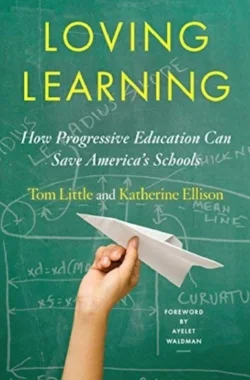
My passion for progressive education eventually led me to Tom Little’s book, Loving Learning: How Progressive Education Can Save America's Schools. This beautifully written book is a great place to start for anyone looking to become familiar with or deepen their understanding of progressive education.

lovinglearning.JPG
Posted
AuthorPete Moore

As the school year draws to a close, I have been reflecting on how tremendously fortunate I am to be an educator. I feel I am one of the luckiest people in the world. I was born into a family of modest means. However, growing up I wanted for nothing and spent my childhood exploring, dreaming, playing sports and Star Wars, skateboarding, going to the beach, and climbing trees. I was surrounded by people who loved me and encouraged me to try new things. Now I am married to a remarkable woman, have a healthy and happy daughter (with another daughter on the way!), live in a foreign country that I love, have a challenging and rewarding job, and work with people I adore. What more could I ask for?

There is often a feeling that the more our personal circumstances improve, the more we will be able to inoculate ourselves and our children from anxiety, heartbreak, and difficulty. This is simply not true. All of us will experience hardship and heartbreak. Our daily lives may involve less struggle than others in more impoverished situations. However, the depth of our heartbreak and our children’s heartbreak will tend to be consistent no matter what our circumstances may be, and every one of us will experience great loss. How do we teach our children to be resilient as well as be grateful of all they have?

worldwasavillage.jpg

The amazing children's books If the World Were a Village and If America Were a Village highlight just how tremendously fortunate our children are simply to have a roof over their heads, warm running water, and a place to go to school. I encourage you to read them to your children and gently remind them of how deeply fortunate they are. The books can be found online, at the library or at your local bookstore.

While teaching our children to be grateful for all they have, we also need to prepare our children for the future. We need to do this in ways that will empower them and ensure that they are resilient and strong enough to face the inevitable hurdles that they will have to overcome. While we cannot predict what careers our children will have in thirty years time, we do know that for them to be successful, they will need to be able to problem solve, innovate, and overcome seemingly insurmountable obstacles. We need to prepare our children for these obstacles and try not to remove the obstacles from their way. 

Posted
AuthorPete Moore

It was with great excitement that we recently welcomed Jessica Lahey to Lake Forest Country Day School. Her book The Gift of Failure is an insightful and timely child development book.  She eloquently describes the pressure that parents and children face along the path to college and how the fear of failure can cripple even the most adventurous and inquisitive children.

Twenty years ago, the idea of teaching children the importance of failure and how to bounce back from it was a radical one. It was commonly accepted that the path to school success, and success in later life, was dictated by a student's ability to know a lot of facts and consistently get things right. This paradigm has drastically shifted, and now we are actively teaching our children how to be persistent, develop grit, and how to prototype or iterate.

It is our hope that by teaching students grit and concepts like design thinking, they will be able to manage the inevitable hurdles and disappointments that come their way. We tell our children, “Everyone makes mistakes,” “Failure leads to success,” and “We learn from our mistakes.” Despite this encouragement, children do not always feel as though the adults in their lives are telling them the truth when it comes to failure.

Children often seem to learn more from what we do than what we say. As an educator and parent, I have devoted myself to helping children accept mistakes, embrace the unknown, and face the imposters of success and failure similarly. Unfortunately, I have not always managed to hide how I feel when I fail. As a child, I thought that when I made a mistake it was because I was a failure and mistakes were to be avoided at all costs. Even though I now know intellectually, “Failing does not mean I am a failure,” it can still be challenging for me when I fail.

I ask that you reflect on how you treat yourself when you fail and what your students observe. Are you kind to yourself and dust yourself off quickly or are you, at times like me, more hard on yourself than you would be to anyone else? 

Talk to your students about your failures; how you feel when you make mistakes, and how you recover from them. Share with them the unhelpful beliefs you may have developed about mistakes and failure. Also, give yourself a break when things do go wrong. By doing this, you will show your students that failure is not to be feared and that it can truly be a gift.

Posted
AuthorPete Moore

I recently had a conversation with my fourth grade students about leadership. I designed a Gamestorming  activity to get a better understanding of their feelings about leadership. One of the themes that kept coming up was bravery, which started me thinking about bravery as it pertains to a school leader.

Early on as a school administrator I realized that I had to be brave enough to deliver difficult news and initiate and resolve challenging conversations. This led me to read a book called Difficult Conversations: How to Discuss What Matters Most by Douglas Stone, Bruce Patton, Sheila and Heen.

This book lays out a step-by-step approach that helped me listen to understand,  disentangle impact from intent, and distinguish blame from contribution. Most importantly the book helped me become more compassionate and empathetic.

Using the strategies outlined in this book may not prevent all conversations from being difficult but you will end up building deeper and more meaningful relationships when a conversation does become difficult.

Other Helpful Books
Getting to Yes   by Roger Fisher, William L. Ury and Bruce Patton
Making the Most of Difficult Conversations by Mike Riera
Crucial Conversations: Tools for Talking When Stakes by Kerry Patterson

Posted
AuthorPete Moore

"Mindfulness can be thought of as moment-to-moment, nonjudgmental awareness, cultivated by paying attention in a specific way, that is, in the present moment, and as non-reactively, as non-judgmentally, and as open-heartedly as possible."
Jon Kabat-Zinn

One of the most incredible things I have seen in my time working in the field of education is the acceptance of mindfulness as an essential skill that children should develop. The health benefits of mindfulness have been widely researched, and organizations such as Mindful School, based out of Oakland, have done a lot to further the mindfulness cause.

I began practicing mindfulness meditation when I was a public school teacher in Australia over seventeen years ago. I began exploring meditation as a way to be more present. I attended a meditation center, went on meditation retreats, and eventually taught mindfulness meditation in Sydney, Australia.

When I started practicing mindfulness meditation, I was reluctant to talk about it with my colleagues because I did not know anyone else who meditated. I also was concerned about what they would think. I spoke to my fourth and sixth-grade students about some of the simple practices that I experienced on the retreats I attended. By introducing simple mindful breathing and eating techniques, the students were able to be introduced to mindfulness in subtle yet powerful ways.

Fast forward nearly two decades, and I am amazed at how much mindfulness techniques continue to enhance my life. I feel such joy when I hear about how more and more schools are weaving mindfulness practices into their curriculum.

At Lake Forest Country Day School, I continue to integrate mindfulness into the routine of the students that I lead. During our weekly Lower School community gatherings. I lead a "mindful moment" where students, faculty, and parents simply place their hand on their belly and pay attention to their breath. Each time that I teach this skill, I marvel at how something so simple can make such a big difference.

For our students that have difficulty making good choices in the classroom, they can draw on their breath as a calming technique. For our parents who become frustrated at the end of the day when their children do not want to do their reading, they can quiet their mind by attending to their breath. For my faculty, they know that they are encouraged to take a moment to gather themselves so that they are not hijacked by their strong emotions on an off day.

This common practice allows our school community to care for themselves in a shared way. It has been one of the most positively commented on initiatives that I have led at the school. I believe, and research shows, that helping children (and adults) to become more aware of their emotions and patterns of behavior can have a profound effect on their wellbeing.

Although mindfulness is much more ubiquitous, it can still feel somewhat mystic and strange for many school leaders looking to become more informed. If you would like to learn more about mindfulness, I suggest you do three things.

  1. Read The Miracle of Mindfulness: An Introduction to the Practice of Meditation by Zen Master Thich Nhat Hanh.

  2. Develop your own mindfulness practice. An excellent way to start is by downloading and following the Headspace App.

  3. Explore the resources on the Mindful Schools website. You will find many ways in which you can explore mindfulness in a manner that feels approachable for you and your school.

Posted
AuthorPete Moore

In early March, a few colleagues and I went to a presentation by Madeline Levine, Ph.D. hosted by The Family Action Network. Dr. Levine spoke about the challenges of raising children in a diverse and complex world, managing feelings, and learned helplessness.

One of my main takeaways from the evening was that very few people take a predictable path to success. This fact, combined with the knowledge that getting into a respected university does not guarantee our children’s financial, emotional, and social success, can leave parents feeling lost and fearful for their children's future.

Such fear about the future is often transmitted to the child, and an unhealthy cycle begins. What can we as parents and educators do instead? We believe that the approach we need to take is to prepare our children for the unknown.

We cannot know the path our children will walk in fifteen or twenty years. However, research has shown, and our intuition tells us, that it is the qualities our children embody that will largely determine their success. Instead of trying to get each child to walk a prescribed path, we need to prepare them for paths we cannot foresee. I believe my job as a parent is to be deliberate about the person I want my daughter to become, not deliberate about the path I want her to take.

Posted
AuthorPete Moore

As my time at CAIS draws to a close I have been reflecting on how grateful I am for the opportunity to work at the school. I have had many transformative experiences and learned things that will set me up for a lifetime. However, there is one thing I keep coming back to. The most profound lesson I have learned at CAIS is what it takes to be an extraordinary parent when your child needs you most.

My daughter, Ruby, was just seventeen months old when I began working at CAIS. Despite being in education and being a student of child development for many years when Ruby was born, I felt drastically unprepared to be a parent. I read even more books on child development and parenting, however, it was not until I started working at CAIS did I truly learn to be the parent Ruby needs me to be.

You never know when life changing moments are going to occur. One of these moments occurred for me within weeks of starting at CAIS in 2011 at one of my first parent meetings. The parents were meeting to update me on their child’s learning differences. I was struck by the absolute belief and trust they had in their child and in the school, especially when the mother looked at me and said, “My child is going to be the first child with dyslexia to graduate CAIS.”

I was inspired and thought, “That’s sort of parent I want to be.” Over the last few years I have had hundreds of meetings with parents about topics that represent particularly high stakes in childhood—behavior, social and emotional growth, and academics. In each of those meetings I look for something that I can take away that will help me become the greatest father to Ruby that I can possibly be. As Ruby enters kindergarten in the fall I would like to share with you the three main lessons I have learned from parents who have helped their children thrive and in turn have inspired me.

The reasons these lessons resonate with me is I know there is likely going to come a time when something occurs with Ruby that will completely blindside Chris and I and we are going to feel ill equipped to deal with it. Situations like this happen to most parents. Sometimes they happen when our children are in elementary school or much later in high school or post college. Whenever these situations occur, I want to be ready for them. I hope the advice I have learned from others will help you in these moments too.

1. Create Alliances
The first lesson I learned is effective parents create strong alliances with those who work with their children. These relationships are built on a mutual purpose and trust. These alliances are not always easy or comfortable but they remain focused on what is in the best interest of the child.

2. Early Intervention
The second lesson I have learned is effective parents seek whatever support their children need to be successful. We have a well-staffed and experienced student services team at CAIS. Despite this, there are times the school needs more information or assistance to help the child thrive. In these situations I have learned that the best thing to do is to focus on early intervention and information gathering.

3. Seek Solutions
The final thing I have learned and this is the one that has affected me the most. The parents whose children overcome the biggest obstacles are solution focused. They never blame others for their child’s situation. Successful parents advocate and challenge others and have pushed our school to be a better school and me to be a better educator by focusing on solutions. When I meet with parents and they focus on solutions, I know in my heart that their child is going to be okay.

Some of the most rewarding moments of my career are a result of the most challenging situations I have faced alongside parents. I have learned so much about how to parent my own daughter and her life will be more loving and rewarding because of the parents I have met at CAIS. Being there when our children need us most is the most important thing any of us can do. I will be forever grateful for the lessons I have learned and the transformational impact the lesson I have learned from CAIS parents have had on my life.

Posted
AuthorPete Moore

Independent schools are often seen in one of two categories: Either they are academically rigorous, or they are nurturing. Parents decide to send their children either to a school that will help them reach their academic potential or to a school that will develop them as a people. What we are doing here at the Chinese American International School (CAIS) is bringing these two views together. We want to continue the school's tradition of being highly engaging while also leading the way regarding social and emotional learning, so our students are ready for the challenges that await them well beyond their time at CAIS.

To help our children become successful, we often need to do what seems the opposite of what we think is true. Psychologist Madeline Levine writes "Counterintuitive as it seems, the very things we're doing to secure our children's futures can end up compromising them. Pushing and over-scheduling prevent them from becoming competent adults capable of the resilience, perseverance, motivation and grit that business leaders say they'll need to compete in tomorrow's workforce. Just as importantly, it interferes with the ability to cultivate healthy relationships and to feel that life is meaningful."

I believe that independent schools are responsible for giving children the tools that they need to help their lives blossom and unfold. It is important to challenge children and assist them to meet those challenges, but not push so hard that we risk squelching their love of learning.

Posted
AuthorPete Moore

Implementing a social and emotional program (SEL) at your school can be challenging, but with proper planning it can be done efficiently and authentically. During my second year at CAIS we implemented The Toolbox Project by Dovetail learning.

Below are the eight steps we took over the course of a two-year period to put our program in place. We took the first four steps in Year One and the last four steps in Year Two. Ongoing work is necessary to sustain the program, but we now have a solid foundation.

1. Deep Dive: Spend time listening to your school community to uncover what their concerns and expectations are as regards SEL, character education, non-cognitive skills, student behavior and school culture.
2. Explore and Clarify: Form an SEL committee to further understand and address issues that emerged during the deep dive.
3. Research: Spend time researching and understanding different SEL programs to determine the one that best suits the needs of your school.
4. Partnering: After choosing an SEL program, work closely with the organization to develop an appropriate implementation strategy for your school.
5. Professional Development: Provide meaningful professional development so faculty and staff feel comfortable with the program.
6. Implementation: Closely monitor the implementation of the program to ensure that community concerns are understood and then provide appropriate support.
7. Communication: Communicate the SEL initiative through various channels and include a parent education component in the program.
8. Ongoing Assessment: Continue to reassess the effectiveness of the program—gathering feedback and making necessary adjustments in a timely fashion.

As with most school change, there were some unexpected twists and turns during the initial research and implementation stages of The Toolbox Project. A resource that we found especially helpful at CAIS was Rob Evan’s book The Human Side of School Change.

Posted
AuthorPete Moore

I believe it is vitally important for schools to address the emotional and social needs of their students as well as their academic needs. Thankfully, this is no longer the radical concept that it was when I began teaching in the late Nineties. In fact, it has received a good share of national attention during the last few years.

According to Zins & Elias (2006) “…social and emotional learning (SEL) is the capacity to recognize and manage emotions, solve problems effectively, and establish positive relationships with others, competencies that clearly are essential for all students.”

The Collaborative for Academic, Social and Emotional Learning (CASEL) has done a remarkable job making the research into SEL very accessible. Their website is full of information that is as useful as it is fascinating.

CASEL outlines five interrelated behavioral, affective and cognitive competencies.
• Self-awareness
• Self-management
• Social awareness
• Relationship skills
• Responsible decision-making

I have been fortunate enough to work alongside some of the leaders in the field of SEL at the Nueva School—including Janice Toben, Nick Haisman, and Elizabeth McLeod.

Janice, Nick and Elizabeth now help facilitate the Institute for SEL with other SEL experts including, Rush Sabiston Frank. I would highly encourage you to attend an Institute for SEL (held annually in the San Francisco Bay Area).

SEL Resources

CASEL
Institute for SEL
Social and Emotional Learning Research Group
Social and Emotional Learning | Edutopia
The Toolbox Project

Posted
AuthorPete Moore

One of the most interesting and rewarding aspects of being a school administrator is being involved in so many different aspects of the school. As a fellow administrator put it: “Being a school administrator is like being in a meteor shower.” 

post_it.png

When I first became a school principal I was introduced to David Allen's book, Getting Things Done. This book was brimming with insights and completely transformed the way I viewed the many components of personal organization. GTD, as it is known, is a system that helps you master productivity and workflow. The system was not specifically designed for school administrators, but the lessons and wisdom could not be more relevant.

I feel that Getting Things Done is a must read for all administrators. This book has acted as a guide to me both professionally and personally. Here is a link to a video of David Allen speaking at Google a few years ago—YouTube - David Allen @ Google 2007. This is a wonderful introduction to his work.

Allen's other book Making It All Work is also an essential resource. I have participated in webinars offered at www.davidco.com and listened to many of David Allen’s podcasts available on iTunes


Posted
AuthorPete Moore